
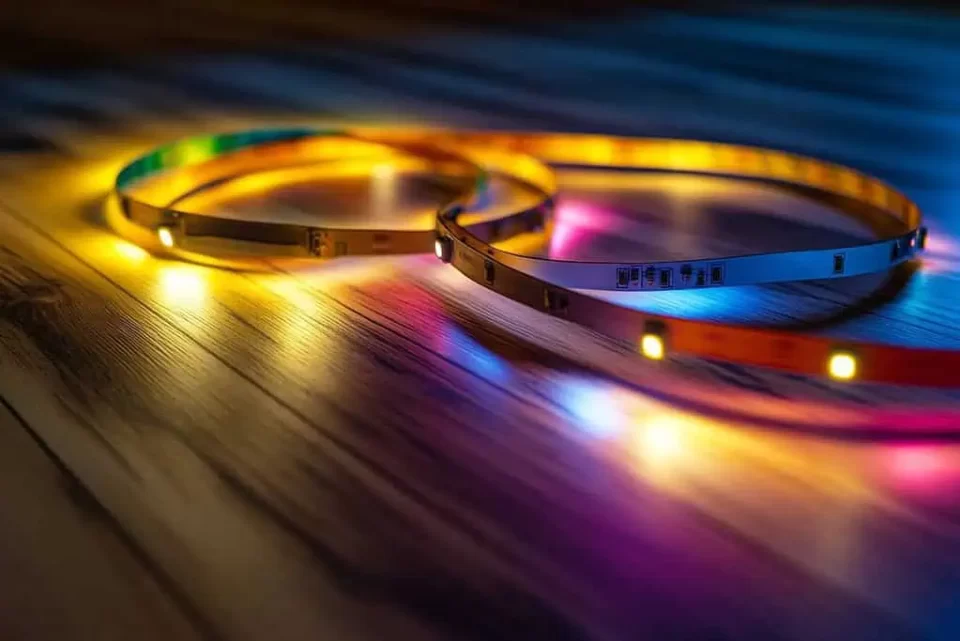
Lighting plays a subtle but powerful role in the way we perceive spaces. Whether it’s a modern office or an outdoor billboard, the quality and type of light can transform how people engage with an environment. In the world of LED lighting, two essential components strip lights and modules are often at the core of these designs.
What Makes LED Strip Lights So Versatile?
LED strip lights are known for their adaptability. Available in a range of colors, brightness levels, and waterproof ratings, they’re used in everything from residential under-cabinet setups to architectural highlights and commercial interiors.
Unlike traditional lighting, LED strips are flexible, energy-efficient, and easy to integrate into narrow or curved surfaces. Most strips run on low voltage (typically 12V or 24V), and offer options in terms of LED density, color rendering (CRI), and dimmability. These features allow designers to fine-tune the lighting experience based on mood, application, or brand tone.
What Happens Inside a Manufacturing Facility?
To understand the quality behind these products, it’s helpful to take a closer look at the manufacturing side. A well-equipped led strip lights factory doesn’t just assemble components it manages precision engineering from the chip level to final testing. Processes often include automated SMT (Surface Mount Technology) machines, wave soldering, waterproof coating, and rigorous quality control checks.
What sets one factory apart from another is attention to detail. Factors like thermal management, uniform brightness, and consistent binning (color accuracy across batches) reflect the maturity of the production process. A reliable factory ensures every roll of strip light performs just as expected.
LED Modules: Compact Yet Powerful
LED modules are typically used where directed brightness is more important than continuous illumination. Think retail signage, channel letters, and backlit logos. Each module contains one or more LED chips enclosed in a protective housing, often with built-in lenses for beam shaping.
What makes modules stand out is their modularity. They’re easy to snap into place, align with various shapes, and work well in both indoor and outdoor applications. Many modules are IP65 or higher, meaning they’re built to withstand dust and water exposure.
In recent years, led module suppliers have broadened their offerings to include high-efficiency models, thinner casings, and enhanced color uniformity. This opens up new creative opportunities for designers who need strong lighting in small, irregular spaces.
Choosing the Right Product for the Job
So how do you decide between strip lights and modules? It really depends on your lighting goals.
- Go with strip lights when you need continuous, even illumination over long stretches like in accent lighting, shelves, cove lighting, or exterior trims.
- Choose modules for point-specific lighting like signs, letters, or displays where beam focus and brightness matter more than linearity.
Each has its place, and in many projects, you’ll find both working in tandem for layered lighting effects.
What to Look for When Sourcing
Regardless of which product you choose, quality sourcing is essential. Here’s a quick checklist:
- Certifications: Look for CE, RoHS, or UL, depending on your region.
- Datasheets: Ensure clear specifications are available, including voltage, current, power consumption, and installation instructions.
- Customization: Good suppliers allow you to tweak LED color temp, voltage, or chip density based on project needs.
- Support: Pre-sale and after-sale support can make or break your experience especially on bulk orders.
When dealing with new suppliers or factories, always request product samples and test them under real-use conditions. This can help catch any issues with color matching, voltage stability, or physical durability before you commit.
Tips for Installation and Maintenance
Both strip lights and modules are relatively easy to install, but a few best practices can go a long way:
- Power matters: Match your lights to the correct power supply to avoid overdriving LEDs.
- Spacing is key: For modules, consistent spacing ensures even brightness. For strips, too much bending can damage the circuit.
- Heat dissipation: Aluminum profiles help keep strips cool, extending lifespan.
- Protect connectors: Especially for outdoor use, ensure all connectors and power ends are sealed properly.
Regular inspections, especially in commercial or high-traffic areas, can help you detect flickering or color degradation early.
Final Thoughts
Understanding how LED lighting is sourced, made, and used can elevate your lighting projects from average to exceptional. Whether you’re evaluating a led strip lights factory for architectural installs or sorting through led module suppliers for signage applications, the key is to prioritize transparency, quality, and reliability.
By asking the right questions and understanding the core differences between strips and modules, you’ll be better equipped to make decisions that blend performance with design ensuring your projects shine in all the right ways.
